
Vinsanto and Nykteri: Santorini’s Two Traditional Wines, Explained
Updated October 2026 · Written by the Santorini Wine Adventure team
Short answer: Vinsanto is Santorini’s traditional sweet wine. It is made from grapes — at least 51% Assyrtiko, with Aidani and Athiri — that are dried in the sun after harvest, fermented slowly and aged for at least two years in oak; the result is amber to deep brown, with flavours of dried apricot, raisin, honey and coffee, balanced by Assyrtiko’s sharp acidity. Nykteri is a dry white, at least 75% Assyrtiko, with a minimum of 13.5% alcohol and at least three months in oak, so it is richer and rounder than a fresh Assyrtiko. Both are protected traditional terms under the Santorini PDO (Protected Designation of Origin), and both are poured on our wine tours.
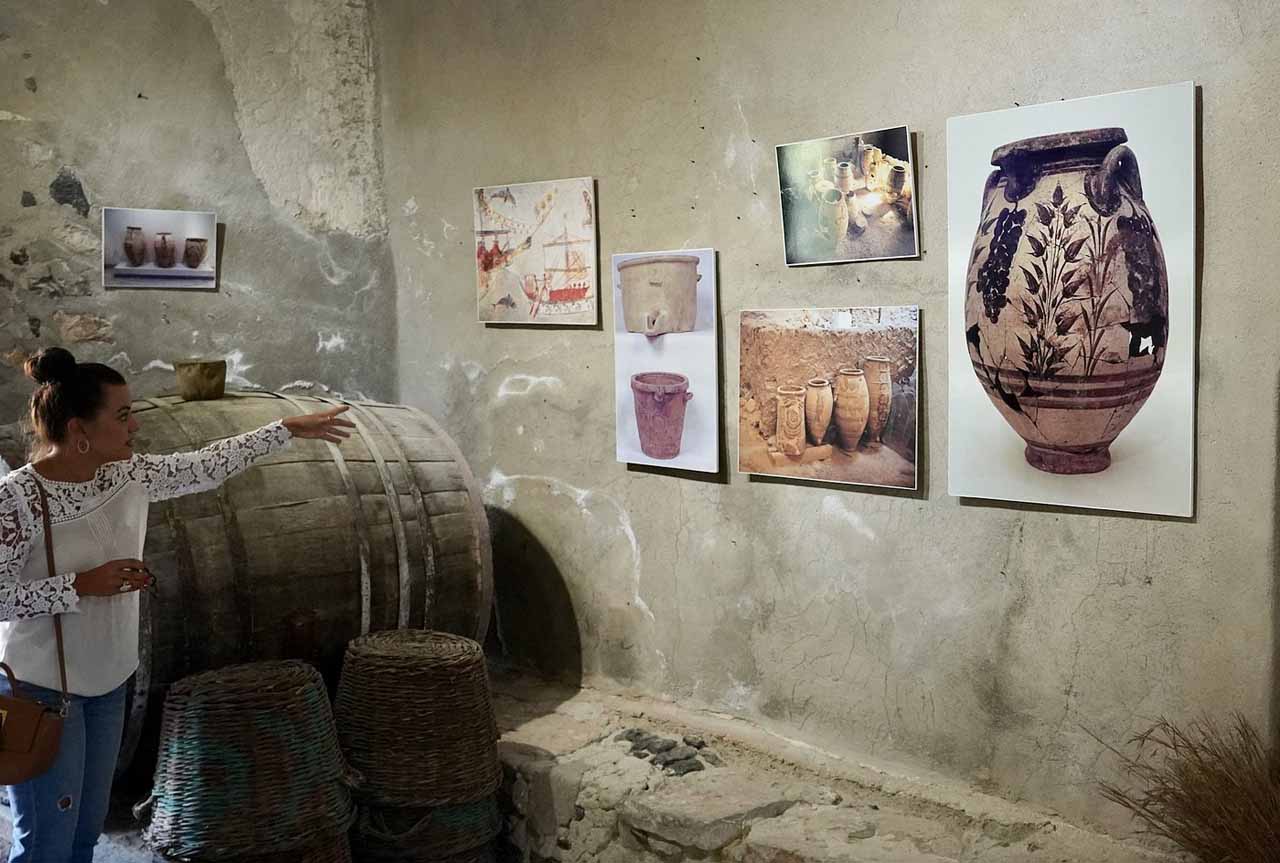
Vinsanto: Santorini’s sweet wine
How Vinsanto is made
- Grapes: at least 51% Assyrtiko, with Aidani and Athiri and small amounts of other local white varieties. Many producers use mostly Assyrtiko with some Aidani.
- Sun-drying: after harvest, usually in August, the bunches are laid out in the sun for around one to two weeks. They lose water and the sugar concentrates; the grapes start to look like raisins.
- Fermentation: the very sweet must ferments slowly and stops naturally with a lot of sugar left. No alcohol or sugar is added.
- Ageing: at least 24 months in oak barrels, and many Vinsantos are aged far longer — labels with 4, 8, 12 or 20 years are common.
What Vinsanto tastes like
Young Vinsanto is amber, with dried apricot, fig, raisin and honey. With longer ageing it turns mahogany and picks up notes of coffee, cocoa, caramel and spice. What makes it special is the acidity of Assyrtiko: even very sweet Vinsanto finishes fresh rather than heavy. Serve it lightly chilled, about 12–14 °C, with blue cheese, dark chocolate, nut desserts or on its own.
Where the name comes from
The usual explanation is that “Vinsanto” means “wine of Santo” — Santorini — and that the name spread as the island exported its sweet wine around the Mediterranean, including to Venice and Russia, where it was used as altar wine. It is not the same as Italian vin santo, which is made from different grapes and by a different method.
Nykteri: the “night” wine
How Nykteri is made
The name comes from the Greek word for night. Traditionally, grapes picked during the hot day were pressed during the night, when it was cool enough to protect the juice. Today Nykteri is a protected term for a specific style:
- Grapes: at least 75% Assyrtiko, with Athiri and Aidani.
- Alcohol: at least 13.5%, from fully ripe grapes.
- Oak: at least three months in barrel; some producers also ferment in oak.
What Nykteri tastes like
It is dry, full-bodied and textured, with ripe citrus, stone fruit, a little toast or vanilla from the oak, and the salty, mineral finish typical of Santorini. Think of it as Assyrtiko for people who like richer whites. It pairs well with grilled fish, white meat, fava and aged cheeses, and it can improve in bottle for several years.
Vinsanto vs Nykteri vs Assyrtiko
| Assyrtiko (fresh) | Nykteri | Vinsanto | |
|---|---|---|---|
| Style | Dry, light to medium body | Dry, full body | Sweet |
| Main grape | Assyrtiko | At least 75% Assyrtiko | At least 51% Assyrtiko |
| Oak | Usually none | At least 3 months | At least 24 months |
| Grapes dried? | No | No | Yes, sun-dried |
| Typical flavours | Lemon, saline, flinty | Ripe citrus, peach, toast | Apricot, raisin, honey, coffee |
| Serve with | Seafood, salads | Grilled fish, chicken, cheese | Desserts, blue cheese, on its own |

Why these wines only exist on Santorini
The island’s vines grow in volcanic soil with almost no clay, in strong wind and with almost no summer rain. Growers train them low into basket shapes called kouloura to protect the grapes, and many vines are on very old roots, because the island’s soil kept phylloxera away. The result is grapes with high acidity and concentrated flavour — the backbone of both styles. Our Santorini wine guide explains the vineyards in more detail.
Where to taste Vinsanto and Nykteri
Most of the island’s wineries make at least one of the two, and several make both. Our 12-wine tours usually include Vinsanto, and many also pour a Nykteri, so you can taste them side by side with fresh Assyrtiko. Try the Morning Wine Adventure or the Sunset Wine Tour (small group), or a private wine tour if you want to focus on the sweet and aged styles. For the grape behind them both, read what Assyrtiko is.
Frequently asked questions
What is Vinsanto wine?
A sweet wine from Santorini made from sun-dried grapes, at least 51% Assyrtiko, and aged at least 24 months in oak. It is protected under the Santorini PDO.
Is Vinsanto the same as Italian vin santo?
No. They share a similar name, but Santorini Vinsanto uses Assyrtiko, Aidani and Athiri grapes dried in the sun, while Italian vin santo uses different grapes and drying methods.
What does Nykteri mean?
It comes from the Greek word for night, after the old practice of pressing grapes overnight when it was cool.
Is Nykteri sweet?
No. Nykteri is a dry white wine, richer than fresh Assyrtiko because of riper grapes, higher alcohol and time in oak.
How long does Vinsanto last once opened?
Because of its sugar and acidity, an opened bottle kept closed in the fridge stays good for several weeks.
Can I taste Vinsanto on a wine tour?
Yes. Vinsanto is usually part of the tasting on our 12-wine tours, often as the last wine at a winery.